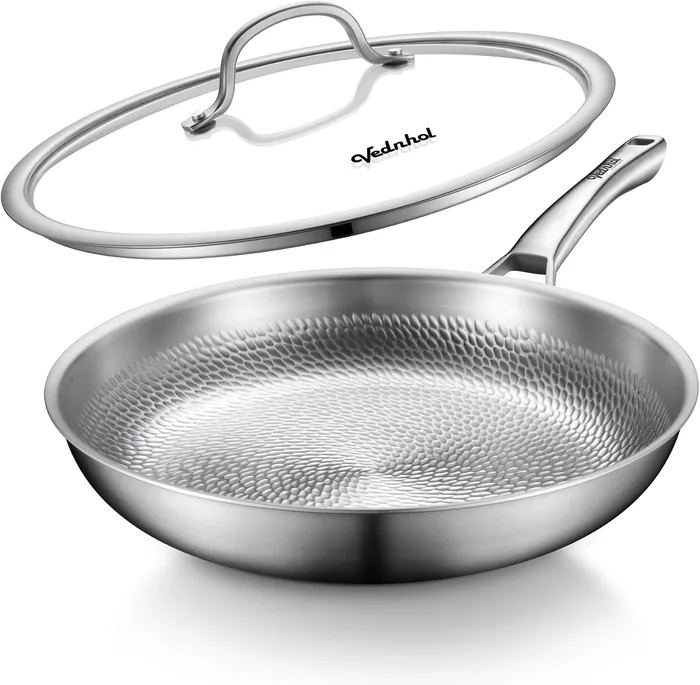
12″ Titanium Hammered Pro frying pan, with lid
12″titaniuminduction
$99.99

Pans and pots built from titanium so you cook without the synthetic coating most people are trying to avoid.
PFAS-free · PFOA-free · PTFE-free · titanium handle · works on induction · oven safe
Choosing a piece opens the shop that handles payment and delivery.
Most bought this month
12″titaniuminduction
$99.99
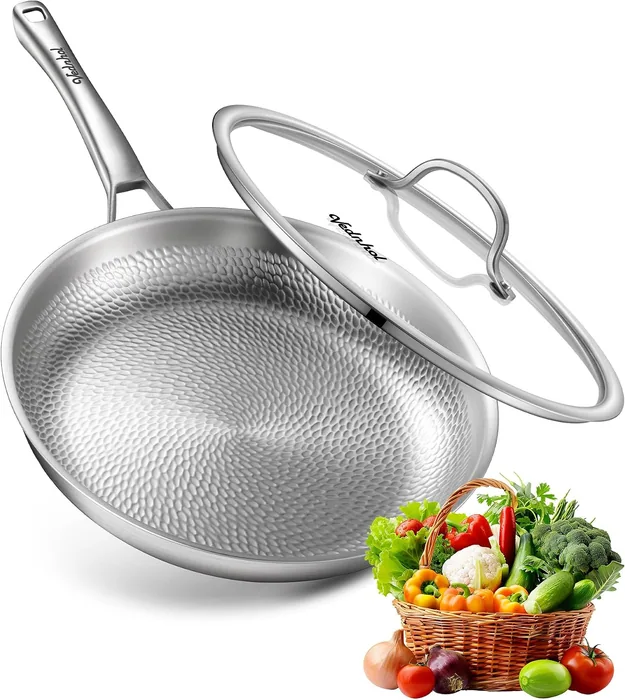
12″titaniuminduction
$109.99
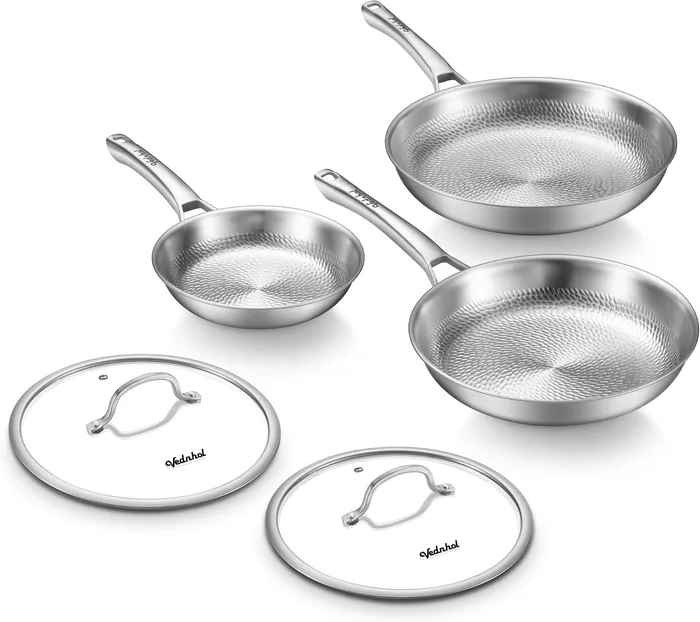
8″ · 10″ · 12″titaniuminduction
$399.99
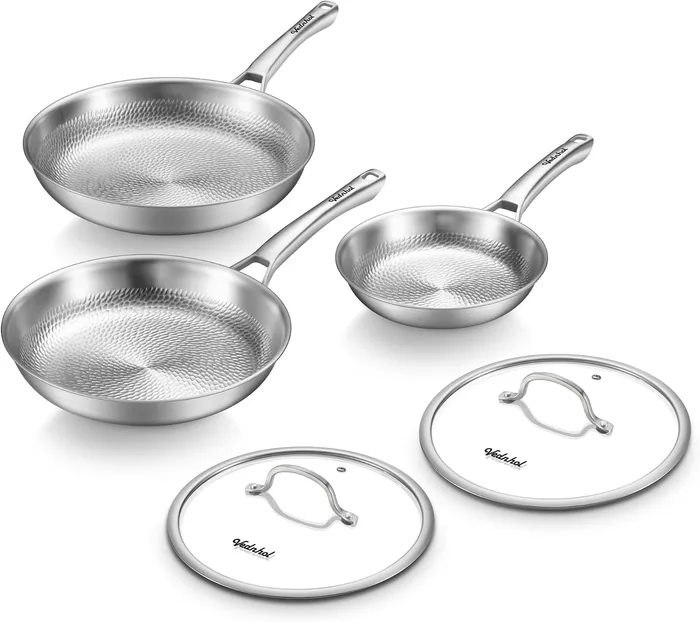
8″ · 10″ · 12″titaniuminduction
$269.99
Quality
A pan should get hot where you need it, not just in a ring over the burner. That is where the Hammered Pro base comes in. Pure titanium resists warping and corrosion, but it does not move heat well on its own. So we layer it with a composite core that spreads warmth out to the edges and holds it steady. You get a sear that runs wall to wall, on any cooktop you own.
Titanium brings one other thing we care about: a cooking surface that stays free of PFAS, PFOA, and PTFE. No fluoropolymer coating to wear down over time. The trade-off is honest. This is not a slick non-stick finish that lets you cook with no fat at all. You use a little oil, you let the pan come to temperature, and you build a natural release the way a seasoned pan works.
Titanium Hammered Pro
12″titaniuminduction
$99.99
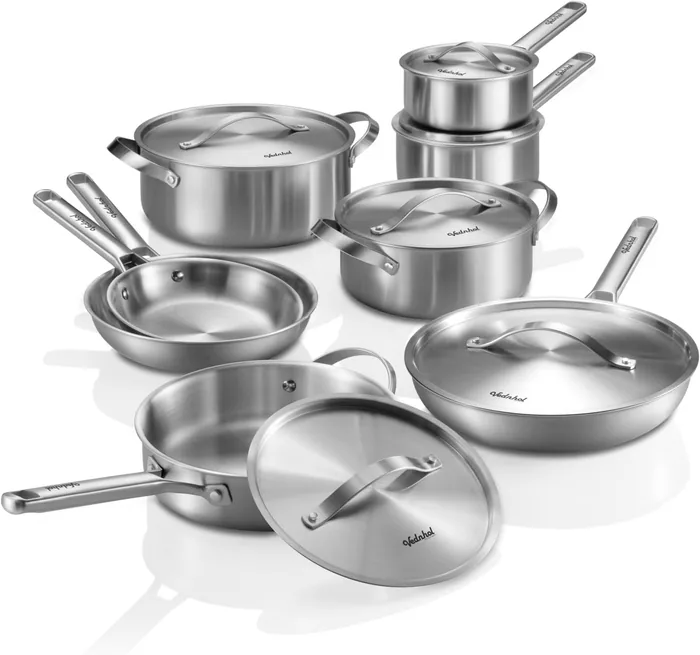
3 QTtitaniuminduction
$399.99
8″ · 10″ · 12″titaniuminduction
$269.99
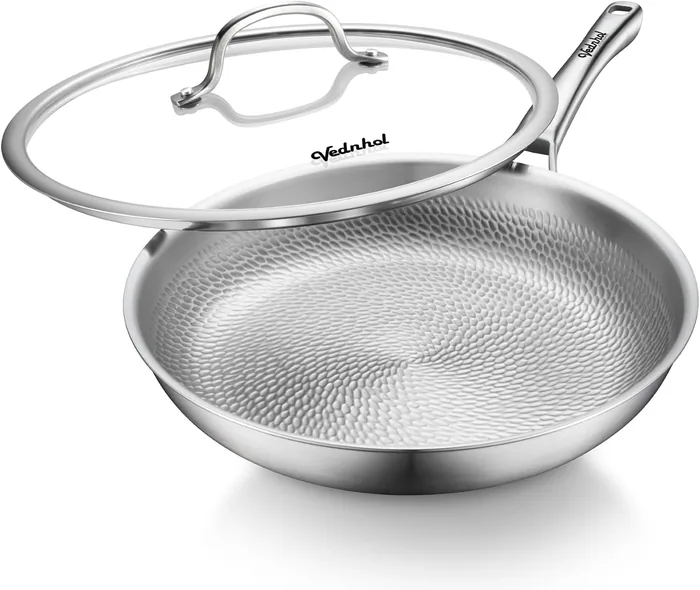
12″titaniuminduction
$119.99
How we compare, how it is made
We cook with five kinds of pans around here, and they each earn their place. The table below lays them out side by side: no one material does everything, and we are not going to pretend ours do. We put our own titanium and tri-ply stainless lines in with PTFE, ceramic, and cast iron so you can see where each one shines and where it asks something of you.
The numbers in the titanium column are not a mistake: pure titanium is a poor heat conductor, so the Hammered Pro base layers a composite core underneath to spread warmth evenly. And no titanium pan is truly non-stick without a little fat in the pan. The stainless line needs a proper preheat or food will grab.
Those are the trade-offs, and we would rather you know them before you cook.
| Material | Heat behaviour | Coating | Care | Where it wins | Where it loses |
|---|---|---|---|---|---|
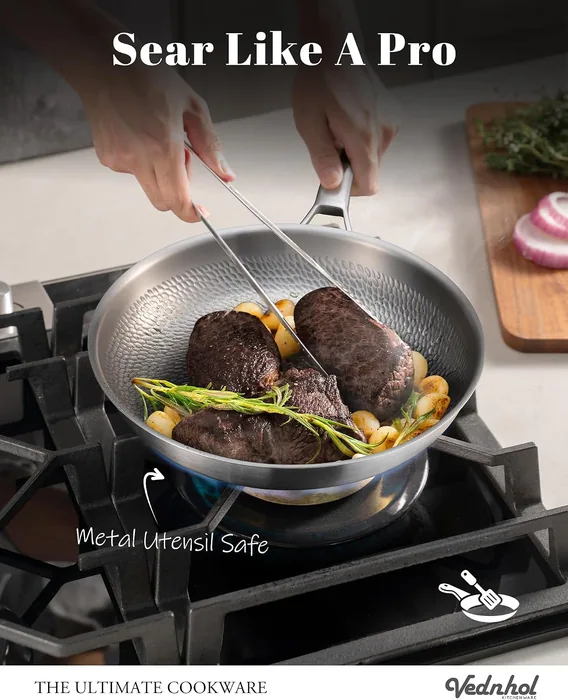
| Titanium (Hammered Pro) | Heats slowly on its own, the layered composite base under the titanium spreads heat evenly once hot | No PFAS, PFOA, or PTFE: the surface is titanium, not a coating | Hand wash, metal utensils are fine | Nothing leaches into food, tough enough for metal spatulas, oven and induction ready | Needs fat in the pan or food sticks, the base does the heat work, not the titanium itself |
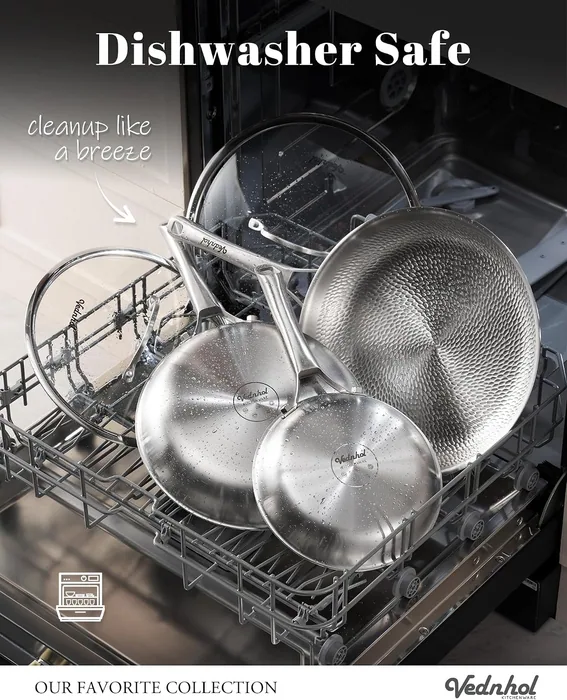
| Tri-Ply Stainless | Heats fast and evenly across the whole pan | No coating: bare stainless steel | Dishwasher safe, scrub with steel wool if you need to | Searing and browning that build a fond, goes from stovetop to oven, nearly indestructible | Food grabs hard without a proper preheat, sticky cleanup when you rush it |
| PTFE Non-Stick | Heats quickly and evenly | PTFE-based non-stick layer | Hand wash only, no metal utensils, discard when the coating scratches | Eggs slide right off, uses almost no oil | Coating breaks down over high heat, pan has a limited lifespan, not oven safe at high temperatures |
| Ceramic Non-Stick | Heats quickly | Ceramic-based non-stick layer | Hand wash, no metal utensils, coating wears faster than PTFE | Slick surface without fluoropolymers, lightweight | Coating degrades within a year or two of regular use, loses its non-stick property gradually |
| Cast Iron | Heats slowly and holds heat like nothing else | Seasoned oil polymerized into the surface | Hand wash and dry immediately, re-season periodically, no soap, no dishwasher | Searing, frying, baking: heat retention is unmatched, lasts generations | Heavy, reacts with acidic foods, rusts if left wet, slow to heat and slow to cool |
We build pans the way we cook: starting with what we won’t put in the food. Every VEDNHOL pan starts with a titanium cooking surface, because that is the part your food touches. Because pure titanium is stubborn about heat, we bond a multi-layer composite base underneath it.
That base spreads warmth evenly across gas, electric, ceramic, halogen, glass, and induction. The handle is solid titanium too, and it stays cool on the stovetop. No coatings that flake.
No mystery layers between the metal and your omelet.
We test a shape in a home kitchen before it earns a place in the lineup. A sauté pan has to brown a chicken thigh without a hotspot. A wok has to toss vegetables for two and still fit a standard burner.
If a piece does not feel right on a Tuesday night: too heavy, a rim that drips, a handle angle that fights your wrist, we rework it until it does. The range grew slowly that way: a few frying pans first, then saucepans and a braiser, each one earning its spot.
Three things we insist on.
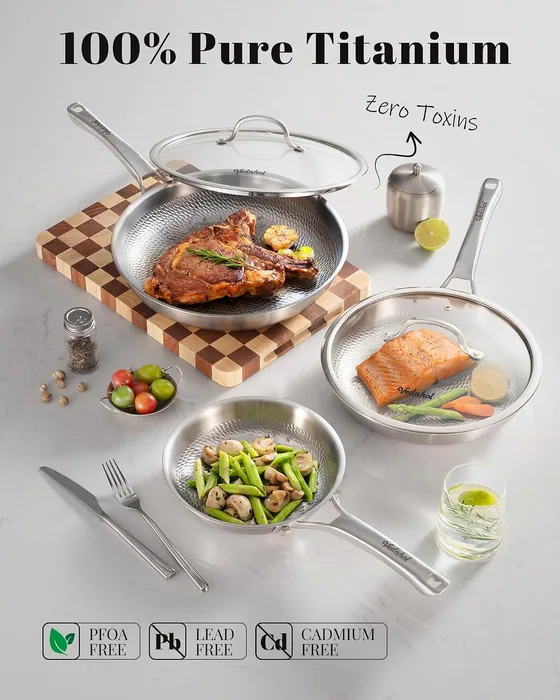
• No PFAS, no PFOA, no PTFE anywhere in the cooking surface.
• A base that does not warp when you move it from a hot burner to a cool counter.
• A handle you can grab without a mitt, even twenty minutes into a simmer.
We make one clear claim about what goes into our pans, and we are careful not to stretch it past what we can show. Every piece in the Titanium Hammered Pro line is built without PFAS, PFOA and PTFE. That is what "non-toxic" means in our kitchen, and it stops there.
We do not coat these pans with anything that contains those compounds, and the solid titanium cooking surface carries no synthetic non-stick layer to degrade. If you need a formal certificate for your records, the shop that ships your order can tell you what paperwork they hold. We publish what we control: the materials we specify and the absence of the three families we refuse to use.
| Claim | What it means | Where it comes from |
|---|---|---|
| PFAS, PFOA and PTFE free | No per- or polyfluoroalkyl substances in the coating or cooking surface | Our own material specification for the Titanium Hammered Pro line |
| Titanium cooking surface | The pan's interior is solid titanium, not a spray-on layer over aluminum | Our product design and construction standard |
| Oven and induction safe | Rated for oven use and works on induction, gas, electric, ceramic, halogen and glass | Our design spec, verified on standard home cooktops |
Tri-ply stainless
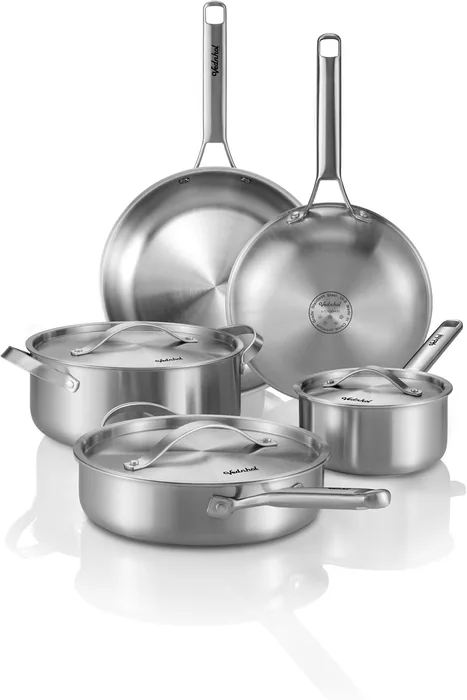
3 QT8 piecestri-ply stainlessinduction
$79.99
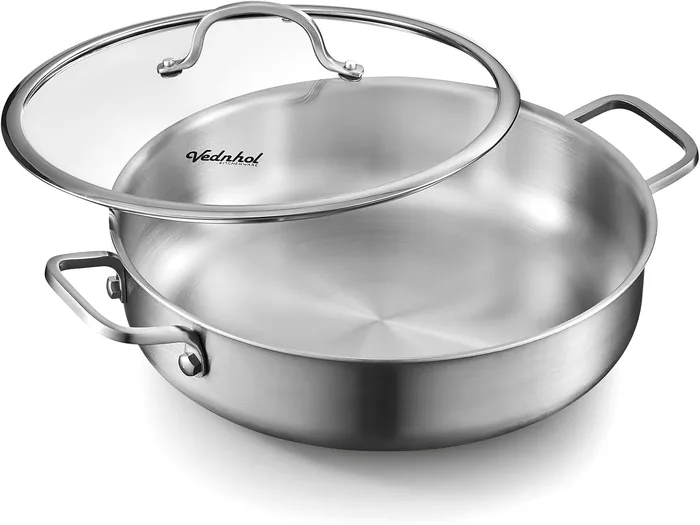
12″7 QTtri-ply stainlessinduction
$29.98
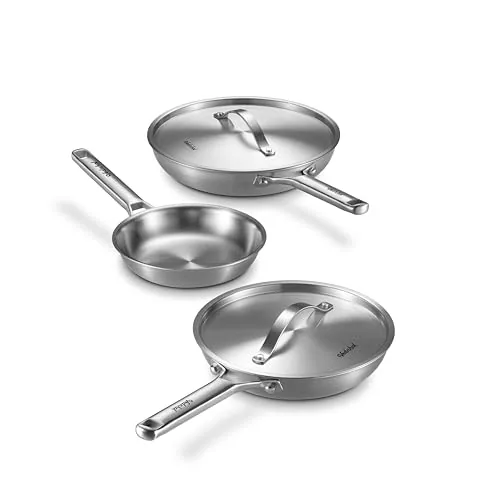
12″tri-ply stainlessinduction
$39.99
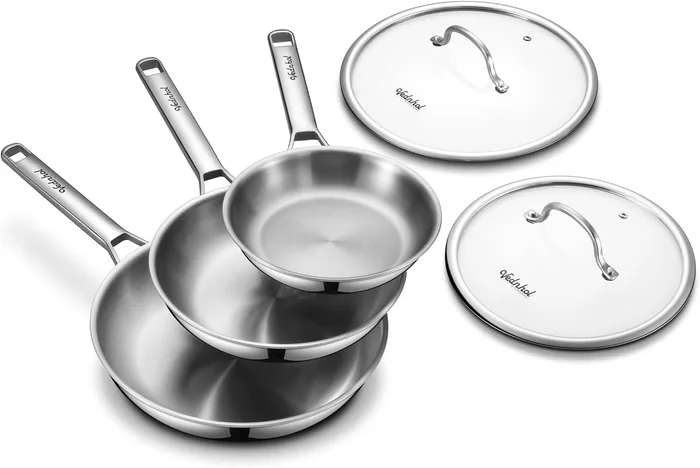
8″ · 10″ · 12″tri-ply stainlessinduction
$39.99
Gallery
About VEDNHOL
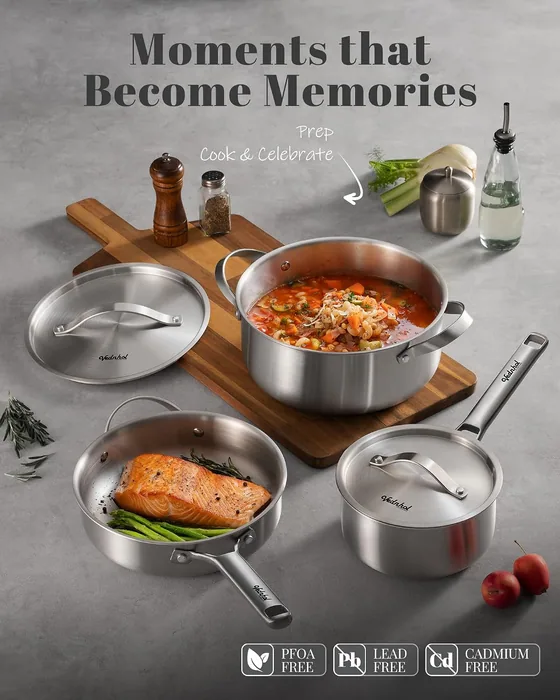
The VEDNHOL kitchen builds cookware around one idea: the coating on your pan should not add anything to your food. We make two lines. The Titanium Hammered Pro line: frying pans, saucepans, a wok, and full sets, uses a titanium cooking surface that contains no PFAS, no PFOA, and no PTFE.
The Tri-Ply Stainless line: skillet sets and a deep 7 QT braiser, gives you a different path to the same goal with an uncoated stainless interior. Both lines work on gas, electric, ceramic, halogen, glass, and induction. Both go in the oven.
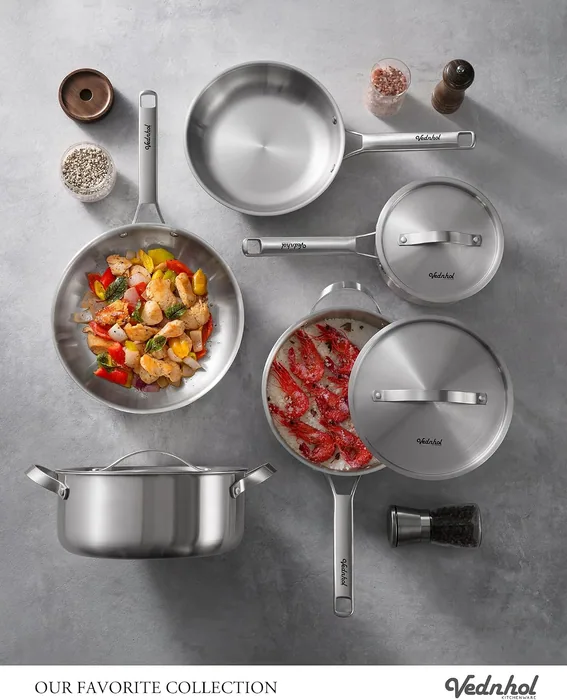
The range runs from an 8-inch everyday pan up to a 13-inch wok, from a 1.5 QT saucepan to the big braiser. You can buy a single pan or pull a matched set off the shelf. The choice is yours.
Pure titanium is biologically inert. It does not react with acidic ingredients, it does not leach, and it does not need a chemical non-stick layer to release food. When you cook on VEDNHOL titanium pan, the surface that touches your omelette is titanium: not a polymer coating that wears away over time.
That matters most at high heat. Most non-stick pans tell you to keep the flame low because the coating breaks down above medium. A titanium pan does not carry that warning. You sear, you deglaze, you finish in the oven. The solid titanium handle stays cool on the stovetop, so you move the pan without reaching for a towel.
The trade-off is weight and learning. Titanium pans are heavier than aluminum non-stick. The cooking surface is not the slick zero-friction glide of a fresh PTFE pan. You use a little oil or butter, you preheat properly, and the food releases. After a few meals, your wrist knows the rhythm.
Titanium on its own is a poor heat conductor. That is the material's one real shortcoming. A pan made of nothing but titanium would hotspot badly and drive you off the stove.
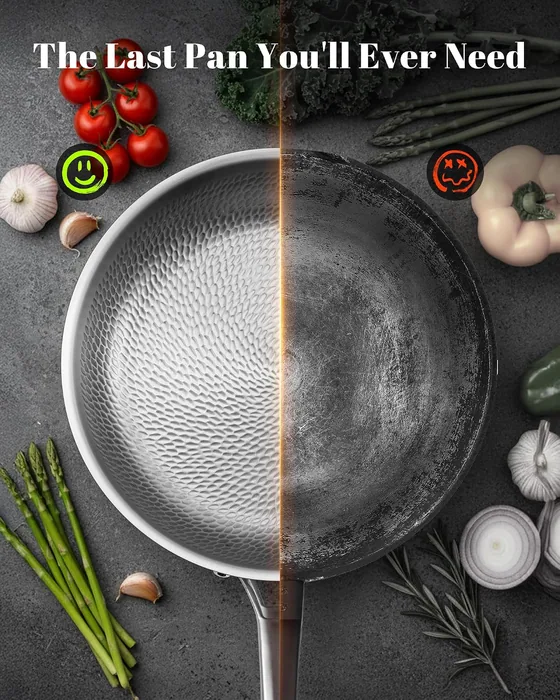
The Hammered Pro design fixes this with a multi-layer composite base. Under the titanium cooking surface sits a core that spreads heat evenly across the pan bottom. The hammered pattern on the surface is not cosmetic: it increases the contact area between food and pan, which improves browning and reduces sticking.
The result is a pan that heats like a good clad stainless piece but keeps the inert titanium surface on top. You get the health benefit without the cooking frustration.
Our stainless line takes the more familiar route. Three layers of metal: stainless exterior, aluminum core, stainless interior, give you even heating and an uncoated cooking surface. There is no titanium here, and no polymer coating either. Just steel and aluminum, bonded together.
This line is for the cook who already knows stainless. You deglaze with wine, you build a pan sauce from the fond, you put the whole thing in the dishwasher when you are done. The pans are lighter than their titanium cousins, and the price sits lower. The 7 QT braiser in this line is the largest vessel we offer: deep enough for a whole chicken, wide enough to brown four thighs without crowding.
If you want the lightest pan we make, the lowest entry price, and dishwasher convenience, the Tri-Ply line is your match.
A pan that is too big wastes heat and feels unwieldy. One that is too small crowds the food and steams instead of searing. Here is a plain guide based on what you cook.
| | If you cook this | Reach for this | |
|---|---|
| | Two eggs, a single grilled cheese, a small omelette | 8" frying pan | |
| | Two chicken breasts, three burgers, a dinner for two | 10" frying pan | |
| | Four servings of pasta sauce, a family steak night, meal prep | 12" frying pan | |
| | Stir-fry for four, deep-fried anything, a big batch of greens | 13" wok | |
| | Sauce for two, reheating soup, melting butter | 1.5 QT saucepan | |
| | Rice for four, oatmeal, a can of beans | 2.5 QT saucepan | |
| | Pasta for a family, a batch of chili, stock from a carcass | 3.5 QT saucepan | |
| | Braised short ribs, a whole roast, deep casseroles | 7 QT braiser (stainless) | |
|---|---|
A few real-world notes:
- The 8-inch pan is a one-person pan. It struggles with more than two eggs at once. Buyers who cook for a family tend to add a 10-inch or 12-inch alongside it.
- The wok is 13 inches wide and deep. It needs a burner with enough output to heat the sides properly. On a small apartment gas ring, a 12-inch frying pan may work better.
- The 1.5 QT saucepan is small. It is the right tool for a single portion of porridge and the wrong tool for a family's worth of pasta.
Across 13 product families, VEDNHOL standards pieces have collected 1,774 ratings. The spread runs from 3.2 stars to 4.8 stars. We publish the full range because hiding the low end would be dishonest.
The strongest ratings: 4.8 stars: sit on a two-piece titanium saucepan set. Buyers describe even heating, a surface that releases food with minimal oil after seasoning, and handles that genuinely stay cool. The titanium frying pans cluster between 4.2 and 4.6 stars.
The 3.2 sits on one titanium cookware set. The negative reviews follow a pattern: the pans arrived heavier than expected, the surface required a learning period, and a few buyers had trouble with food sticking in the first week. These are real experiences, and they match the honest trade-offs of titanium. The pans are heavy. They are not non-stick in the PTFE sense. They reward a little patience.
A smaller pattern shows up across the stainless line: some buyers report discoloration after dishwasher use. This is cosmetic. Stainless steel can develop a rainbow sheen from heat and detergent minerals, and it does not affect cooking performance. If spotless pans matter to you, hand-washing keeps them bright.
VEDNHOL cookware is not for every kitchen.
If you want the lightest possible pan, buy hard-anodized aluminum. Our titanium pans have heft.
If you want the slickest non-stick surface and you do not want to think about oil or preheating, buy a quality PTFE pan and replace it every few years. Titanium asks you to learn its surface.
If you cook mostly on a small portable burner or a camper stove, the larger pans: the 12-inch, the wok, the braiser, will overhang the heat source and frustrate you. Stick to the 8-inch or 10-inch.
If you need a full set at the lowest possible price, the Tri-Ply stainless sets start at $18.04. The titanium sets begin at $269.99. The gap is real, and it reflects the material cost.
Health Is The Most Valuable Thing We Have. Titanium Kitchenware Protect It. That line sits on our store banner because it is the reason the range exists. No PFAS, no PFOA, no PTFE in the cooking surface. A pan that does not add anything to your food, at any temperature you would reasonably cook at.
We do not claim perfection. The ratings show the spread. The stainless line will discolor in a dishwasher. The titanium pans are heavy. The small saucepan is too small for a crowd. But every piece in the VEDNHOL kitchen shares the same commitment: the surface your food touches is the material we say it is, and nothing else.
Long reads
What each surface does to heat, to fat and to your food, and which of the three is wrong for the way you cook.
The water test, the two minutes that decide everything, and why the fond is the point rather than the mistake.
How many pans a kitchen actually needs, what each diameter is for, and where a set beats buying singles.