Guide, 13 min
Pan sizes that earn their shelf: 8, 10, 12 inches and the 7 QT braiser
How many pans a kitchen actually needs, what each diameter is for, and where a set beats buying singles.
A pan that earns its shelf does one thing well and does not fight you on the rest. Diameter is the first decision, and it is a harder one than it looks. Too small and you crowd the food. Too large and you heat empty metal, waste energy, and struggle to find room in the cabinet. This guide walks through the sizes in the VEDNHOL standards, what they cook, what they do poorly, and how many you actually need.
What Diameter Decides Before You Even Turn on the Heat
Pan diameter sets three things at once. First, the amount of food you can sear in a single layer. Crowd a pan and the temperature drops, steam replaces browning, and you might as well have used a pot.
Second, the burner it fits. A 12 inch pan on a small burner heats in a ring with a cold centre. A small pan on a large burner wastes flame up the sides.
Third, the storage footprint. Pans stack badly, and every inch of diameter is an inch of cabinet depth you will not get back.
The sweet spot for one person is 8 or 10 inches. For two people, 10 inches handles most proteins. For a family of four, 12 inches earns its keep at dinner but feels oversized at breakfast. A kitchen with an 8, a 10, and a 12 can cook anything. The question is whether you need all three.
Three Pans or a Set: The Arithmetic
A single titanium frying pan in the VEDNHOL way runs from $99.99 to $399.99 depending on diameter and whether it comes with a lid. A titanium cookware set runs $269.99 to $639.99 and bundles pans with saucepans, often a wok, and lids that fit multiple pieces. Buying three singles lands somewhere in the middle of that set range, but you get exactly the diameters you want and no duplicates.
| Approach | Pieces you get | Price range | Who it suits |
|---|---|---|---|
| Three single titanium pans | 8, 10, and 12 inch, no saucepans, no lids beyond what each pan includes | $300 to $800 roughly | A cook who already owns saucepans and wants control over every diameter |
| Entry titanium set | Typically 8 and 10 inch pans, 1.5 and 2.5 QT saucepans, one lid shared across sizes | $269.99 to $400 | A kitchen starting from scratch or replacing a full nonstick set |
| Large titanium set | 8, 10, and 12 inch pans, 1.5, 2.5, and 3.5 QT saucepans, a wok, multiple lids | $500 to $639.99 | A family kitchen that cooks most meals at home |
The stainless sets run $18.04 to $79.99 and give you a different proposition. They heat differently, they tolerate metal utensils, and they go into the dishwasher. A stainless set makes sense as a second system, not a replacement. More on that when we reach the braiser.
8 Inches: The Egg Pan That Does Not Know It Is an Egg Pan
An 8 inch pan fits one chicken breast, two eggs, or a single burger. It heats fast on a small burner and uses less oil. It is the pan you reach for on a Tuesday morning when no one else is awake.
What it does well: eggs in any form, a single portion of fish, toasting spices, reheating leftovers that need a dry surface, a small omelette that folds neatly because the walls guide the spatula. It also works as a side pan when the 12 inch is busy with the main protein.
What it does poorly: anything that needs room. Two chicken thighs crowd it. A steak for two will not fit. Vegetables steam instead of char because they pile up. If you cook for more than one person most of the time, the 8 inch becomes a breakfast specialist and sits idle at dinner.
The VEDNHOL pieces 8 inch titanium pan weighs less than the larger diameters, which matters when you are flipping eggs one-handed. The solid titanium handle stays cool on a gas burner long enough to move the pan without a mitt. On induction it warms but never gets hot enough to burn.
10 Inches: The Workhorse That Earns Its Shelf Every Day
Ten inches is the most versatile diameter in a home kitchen. It sears two chicken breasts with room to spare. It holds a three-egg omelette that feeds two people with toast. It browns a pound of ground meat without steaming. It fits on every burner size except the smallest simmer ring.
What it does well: pan sauces that start with a sear and finish with a reduction, hash that needs a crisp bottom, a steak for two. Fish fillets side by side, grilled cheese for a crowd if you work in batches, a frittata that slides onto a plate in one piece.
What it does poorly: a whole spatchcocked chicken will not fit. Four pork chops crowd it. A large stir-fry needs the wok instead. The 10 inch is the pan you buy first, and for many kitchens it is the only frying pan they need.
The titanium Hammered Pro 10 inch gets the same composite base as the rest of the line. Pure titanium conducts heat unevenly. The multi-layer base under the titanium surface spreads heat across the full diameter, so the edges sear as well as the centre. On induction the base couples efficiently and the pan comes to temperature fast.
12 Inches: When You Need the Real Estate
A 12 inch pan is a commitment. It is heavy. It needs a large burner or it heats in a ring. It takes up half a cabinet shelf. But when you are searing four chicken thighs for a weeknight dinner or browning a whole pork tenderloin, the space pays off.
What it does well: family portions of anything that needs a single layer, pan-roasting a whole fish. A large frittata that feeds four, searing meat for a stew before it moves to the pot, cooking a full pound of pasta's worth of sauce in the pan while the pasta drains.
What it does poorly: a single egg looks lost. A small burner leaves the outer inch cold. Storage is a problem, especially if you have a stack of pans and the 12 inch needs to go on the bottom. It is too large for a standard dishwasher rack on the stainless models, though the titanium hand-washes easily.
Saucepan Sizes: 1.5, 2.5, and 3.5 Quarts
Saucepans are the quiet partner in a cookware set. They do not get the attention that frying pans do, but they handle every sauce, every grain, every reheated soup. The size dictates what fits and how evenly it heats.
The 1.5 QT saucepan holds roughly one can of soup. It heats fast and pours cleanly. Use it for a single portion of oatmeal, melting butter for baking, warming milk, or making a quick pan sauce from the fond left in the frying pan. It is small enough that the handle never gets in the way in a crowded kitchen.
The 2.5 QT saucepan is the everyday size. It holds a box of pasta's worth of sauce, rice for four, or three servings of soup. The taller walls reduce splatter when you are reducing a tomato sauce. It is the size most sets include as the primary saucepan, and for good reason.
The 3.5 QT saucepan bridges the gap between saucepan and small pot. It holds a full pound of dried pasta with water to cover, a batch of stock for risotto, or chili for four. The larger base means it works on a big burner without wasting heat. If you make oatmeal for a family or boil eggs by the dozen, this is the size.
| Size | Capacity | Fits in practice |
|---|---|---|
| 1.5 QT | 6 cups | One can of soup, oatmeal for one, butter for a batch of cookies, a single portion of rice |
| 2.5 QT | 10 cups | Sauce for a pound of pasta, rice for four, soup for three, polenta for two |
| 3.5 QT | 14 cups | Pasta for four with water, stock for risotto, chili for four, hard-boiled eggs for a week |
The titanium saucepans share the Hammered Pro base with the frying pans. The composite layer under the titanium surface means sauces reduce evenly without hot spots that scorch the centre while the edges barely simmer. A heavy base also means the pan stays put on the cooktop. Light saucepans slide.
The 13 Inch Wok: A Specialist That Earns Its Space
A wok is the one pan where diameter is not about flat cooking surface. The steep walls do the work. A 13 inch wok gives you a wide top opening for tossing and a small base that concentrates heat. It stir-fries, deep-fries, steams, and smokes.
What it does well: a fast stir-fry that moves through the pan in seconds, shallow-frying with less oil than a straight-sided pan. Steaming with a bamboo basket set inside, popping spices at the start of a curry, a large batch of popcorn that needs room to expand.
What it does poorly: anything flat. A wok cannot sear a steak evenly because the base is too small. An omelette slides to the centre and bunches up. A pan sauce reduces too fast in the narrow bottom. The wok is a specialist. If you stir-fry once a week, it earns its shelf. If you stir-fry twice a year, the 12 inch pan does an adequate job with a little more oil and more frequent turning.
The VEDNHOL titanium wok includes a lid, which turns it into a steamer and a smoker. The high walls contain splatter better than any frying pan. The handle is solid titanium and does not need a silicone sleeve, even after twenty minutes over a gas flame.
The 7 QT Braiser: The Pan That Replaces Three Others
A braiser is a wide, shallow pot with a lid. Seven quarts is large enough for a whole chicken broken down, a pork shoulder cut into chunks, or a batch of Sunday sauce that simmers for hours. The wide base gives you searing room. The tall sides hold liquid for braising. The lid traps steam.
What it does well: searing and then braising in the same pan, a large batch of caramelized onions that needs surface area and time, shallow-frying cutlets. A one-pan pasta dish where the pasta cooks in the sauce, roasting a small chicken with vegetables around it, a deep-dish frittata that feeds six.
What it does poorly: boiling pasta. The wide base means you need more water to cover the same amount of pasta, and it takes longer to come to a boil. A stockpot is the better tool. It is also heavy when full, especially the stainless version, and it dominates a cooktop. Storage is a challenge. It does not nest with frying pans.
Cook all food to these minimum internal temperatures, as measured with a food thermometer, before removing food from the heat source.
The braiser is the pan where a thermometer matters most. You are moving from sear to simmer, and the meat needs to reach temperature without the braising liquid boiling hard. The lid on the VEDNHOL team braiser fits tightly enough to hold steam but loosely enough that you can check progress without a full release.
| Instead of | The braiser does it | What you lose |
|---|---|---|
| A large frying pan for searing | Wide base sears four portions at once | Weight, and it is harder to flip with a wrist toss |
| A Dutch oven for braising | Shallow shape reduces liquid faster for concentrated sauce | Depth for a whole large roast |
| A roasting pan for a small bird | Fits a 4 lb chicken with room for vegetables | Height for a turkey or a large roast |
| A sauté pan for one-pan pasta | Wide base reduces sauce while pasta finishes | Nothing, this is where the braiser shines |
How to cook on stainless without food welding to the pan
Stainless Against Titanium: What Each Surface Wants From You
The VEDNHOL Tri-Ply Stainless line and the Titanium Hammered Pro line share a lot. Both work on induction. Both go into the oven. Both have solid handles that stay cool. But the cooking experience differs in two ways that matter every time you use them.
Titanium is the surface you choose when you want to cook without PFAS, PFOA, or PTFE and you want food to release with minimal fat. The hammered texture creates small air pockets under the food, which reduces contact and helps browning without sticking. You still need oil, but less of it. The pan cleans with a wipe while it is still warm.
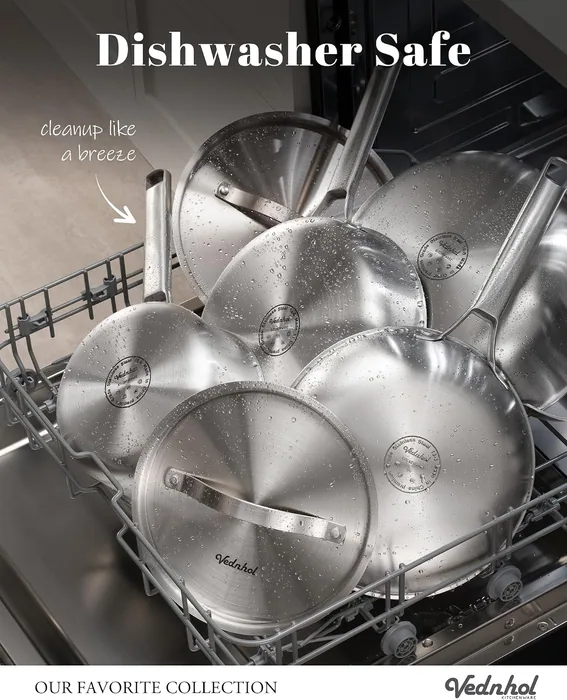
Stainless wants more fat and more attention to temperature. Heat the pan dry, add oil when it shimmers, and wait for the food to release on its own. It will. The reward is a sear that titanium cannot match because stainless gets hotter and holds heat longer. The stainless pans and braisers are also dishwasher safe, which titanium pieces are not.
It is also possible for very small amounts of PFAS to enter foods through processing and cookware.
This is the reason the VEDNHOL kitchen makes titanium the default surface. The FDA acknowledges the pathway. The brand's own claim is that its titanium cookware is free of PFAS, PFOA, and PTFE. No coating means no coating to degrade. The stainless line shares this. Neither surface introduces fluoropolymers into your food.
Titanium, stainless, and nonstick: which surface for which cook
Storage and Stacking: Where These Pans Live
Pans fight for cabinet space. Diameter is the dimension that hurts, and the 12 inch and the braiser are the worst offenders. The best storage solution depends on your kitchen layout, but a few rules hold across all of them.
Never stack titanium on titanium without a barrier. The surface is harder than nonstick but it will scratch if another pan's base grinds against it. A felt pan protector or a folded paper towel between pans costs nothing and keeps the surface smooth. The stainless pieces are tougher and can stack directly, though they will show marks over time.
A wall rack solves the diameter problem entirely. Pans hang by the handle and take up zero cabinet space. The VEDNHOL lineup solid titanium handles have a hole at the end for hanging. The stainless handles do too. If a wall rack is not an option, store the 12 inch on the bottom of a stack with smaller pans nested inside it, handles aligned.
The braiser needs its own spot. It is too wide to nest inside anything except a stockpot, and its lid is large and domed. Store the lid upside down on the braiser body with a protector between them. It saves space and keeps the lid from sliding.
Who Should Not Buy This Range
The VEDNHOL titanium lineup is the wrong choice for a cook who wants a pan they can leave soaking in the sink overnight. Titanium does not rust, but the composite base does not love prolonged immersion. Hand-wash it while it is warm and it takes thirty seconds. Ignore it and the base will eventually show it.
It is also the wrong choice for a cook who wants a lightweight pan they can toss one-handed with a full portion of food. The Hammered Pro base adds weight deliberately, because weight is what keeps a pan flat on the burner and holds heat when cold food hits the surface. A 12 inch titanium pan with a full sear is a two-hand job.
The stainless line is the wrong choice for a cook who will not learn the temperature trick. Stainless sticks when it is too cold or too hot. The window is narrow. If you are not willing to heat the pan dry, wait for the oil to shimmer, and let the food release on its own, buy the titanium instead. It is more forgiving.
What to Buy First
If you are starting from nothing, buy the 10 inch titanium frying pan and the 2.5 QT saucepan. Together they cook eighty percent of what a home kitchen makes. Add the 3.5 QT saucepan next if you cook grains or soups often. Add the 12 inch pan when you start cooking for more than two people regularly.
The braiser comes later. It is the piece you buy when you are tired of searing in one pan and transferring to a pot for the braise. It does both in one vessel and it does them well. But it is large, it is heavy, and it costs shelf space. Wait until you feel the absence of it before you buy it.
A set makes sense financially if you need the saucepans and the pans at the same time. The entry titanium set at $269.99 costs less than the 10 inch pan, the 8 inch pan, and the two saucepans bought separately. But do not buy a set for the pieces you will not use. A wok that lives in the back of a cabinet is not a bargain.
| Kitchen size | First purchase | Second purchase | Skip or delay |
|---|---|---|---|
| One person, small cooktop | 8 inch titanium pan, 1.5 QT saucepan | 10 inch pan when you start cooking for guests | 12 inch and braiser until space allows |
| Two people, standard cooktop | 10 inch titanium pan, 2.5 QT saucepan | 3.5 QT saucepan, then 8 inch for breakfasts | Wok unless you stir-fry weekly |
| Family of four, large cooktop | 12 inch titanium pan, 3.5 QT saucepan | 10 inch pan for quick meals, 2.5 QT for sauces | 8 inch, unless someone cooks solo breakfasts |
| Family that braises and batch-cooks | 12 inch pan, 7 QT braiser, 3.5 QT saucepan | 10 inch pan, 2.5 QT saucepan | Wok, 1.5 QT saucepan, 8 inch pan |
A pan earns its shelf by being used. The ones that sit in the dark at the back of the cabinet cost the same as the ones you reach for every day. Buy fewer, buy the diameters that match the portions you cook, and let the empty shelf space be the proof that you got it right.